Coping with divorce means handling three things at once: the emotional loss, the practical upheaval of money, home and children, and a legal process that can take months or years. It gets easier when you look after your health, lean on the right people, keep your paperwork and finances in order, and take the legal steps one at a time. This guide offers practical, honest advice for people going through divorce in India, with resources available in Bengaluru.
Is your marriage really over?
Before coping comes deciding. Arguments happen in every marriage, but some patterns suggest that a relationship may not be recoverable: lasting contempt rather than occasional anger, one partner having emotionally left long ago, repeated betrayal, or any kind of violence or intimidation. If you are unsure, counselling can help you understand whether there is something to rebuild. If you are unsafe, your safety comes first. Understanding the common reasons for divorce in India, and which of them the law recognises, can also help you think clearly about your situation.
The emotional side of coping with divorce
Divorce is a real loss, even when you chose it. It is normal to feel grief, relief, anger, guilt, fear and loneliness, sometimes all in one day. These feelings come in waves rather than in a neat order, and they usually ease with time.
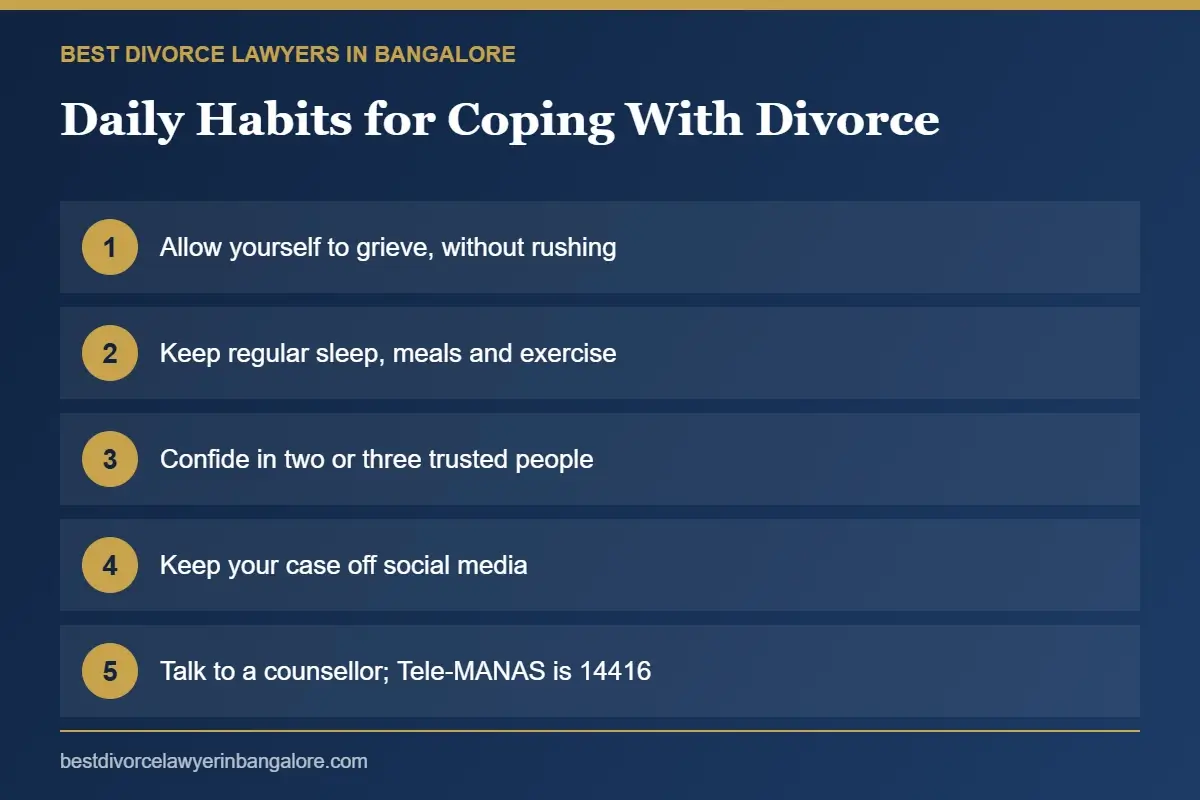
Allow yourself to grieve
You are losing not just a partner but also a shared future, routines, and sometimes friends or in-laws you were close to. Give yourself permission to mourn. Pretending you are fine, or rushing into a new relationship to fill the gap, usually delays healing.
Look after your body
- Keep regular sleep and meal times, even when you do not feel like it.
- Move every day. A walk in Cubbon Park or Lalbagh before a court date can steady your nerves.
- Go easy on alcohol and avoid using it to numb difficult evenings.
- Keep up with any existing medical treatment and check-ups.
Lean on the right people
Choose two or three people you trust, who will listen without pushing you to do anything. Be careful about sharing details widely, especially with mutual friends or relatives who may pass them on, and keep the case off social media: posts can be produced in court.
Get professional support
A therapist or counsellor gives you a confidential space to process what is happening. If you are struggling, Tele-MANAS, the Government of India’s free tele-mental health service, can be reached at 14416 or 1-800-891-4416, and Bengaluru has several hospitals and clinics offering psychiatric and counselling services. If you ever feel unable to keep yourself safe, call 112 or go to the nearest hospital emergency department.
Coping with divorce as a woman in India
Women often face particular pressures: social stigma, questions from family, financial dependence after years of managing a home, and fears about the children. Remember that you have strong legal rights, including maintenance, residence and protection under the Protection of Women from Domestic Violence Act, 2005, maintenance under Section 144 of the Bharatiya Nagarik Suraksha Sanhita, 2023, and the return of your stridhan. Women are also entitled to free legal aid under the Legal Services Authorities Act, 1987, through the Karnataka State Legal Services Authority. The Women Helpline 181 can connect you to support services. Our guide on wife rights after divorce in India explains these entitlements in detail.
Coping with divorce as a man
Men are often less likely to talk about how they feel, and may find themselves suddenly living alone or seeing their children far less. Isolation is a real risk. Stay connected with friends, keep your routines, and speak to a counsellor if anger or low mood starts to take over. Focus your energy on what you can control: being a reliable parent, staying calm in communication, and following the legal process rather than fighting it on WhatsApp.
Helping your children cope
Children are often the people most affected by a divorce, and the way parents handle it matters far more than the divorce itself. What hurts children most is ongoing conflict, being put in the middle, and losing a relationship with a parent.
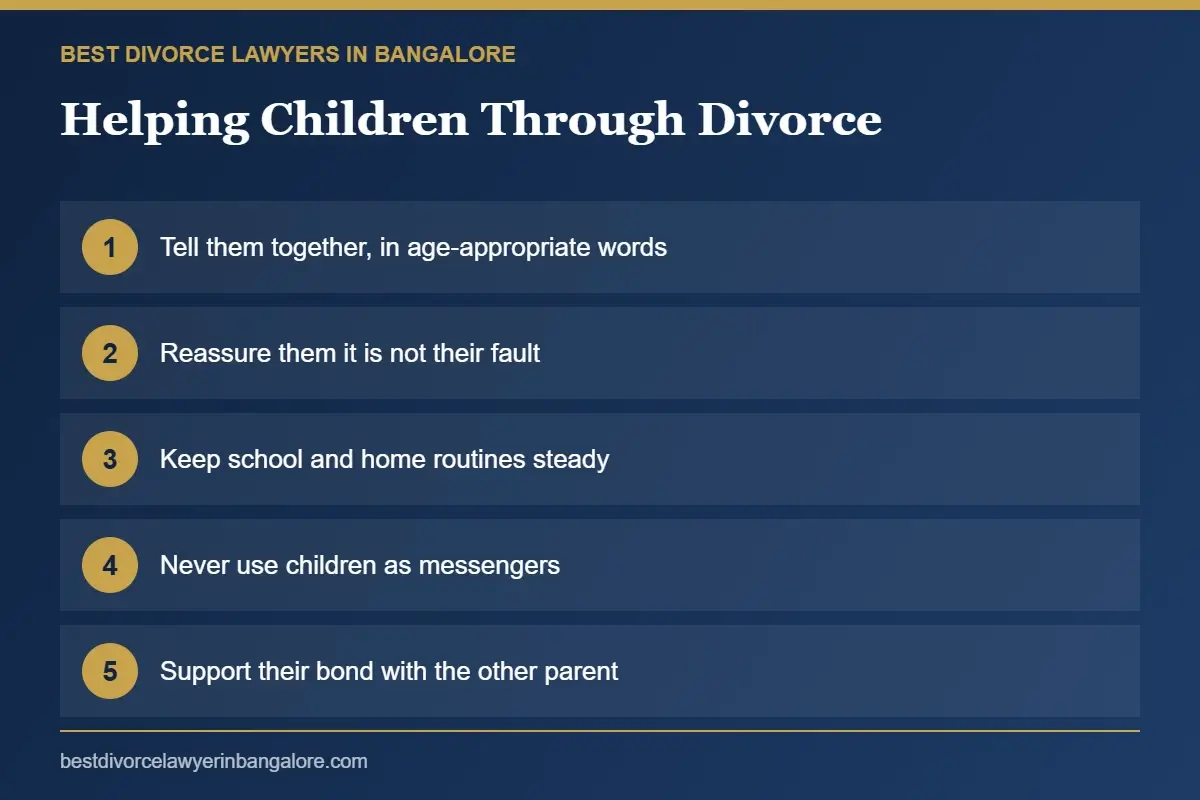
- Tell them together, if you can, in simple, age-appropriate words, and make clear that it is not their fault.
- Keep routines steady: school, meals, bedtime and activities give them security.
- Never use them as messengers or ask them to choose sides, and never criticise the other parent in front of them.
- Watch for signs of distress, such as changes in sleep, appetite, grades or behaviour, and talk to their school counsellor or a child psychologist if needed.
- Support their relationship with the other parent, unless there is a genuine safety concern.
Courts decide custody based on the child’s welfare, not on which parent “won” the divorce. Our guide on child custody laws in India explains custody, visitation and joint parenting arrangements.
Practical steps to protect yourself
Finances
- Open a bank account in your own name if you do not have one, and update your nominees.
- Keep copies of salary slips, tax returns, bank statements, property papers and loan documents for both of you.
- Draw up a simple monthly budget for life after separation, including rent, school fees and legal costs.
- Change passwords for email, banking and social media, and check which devices are logged in.
Home and safety
If you are leaving the shared home, take your important documents, jewellery and personal items with you, or make a list with photographs. If you face violence or threats, call 112 and seek a protection or residence order under the Domestic Violence Act. A woman has a right to reside in the shared household even if she does not own it.
Work
Court dates and stress can affect your work. Consider telling your manager or HR in confidence that you are dealing with a family legal matter, and plan leave around key hearings.
Getting through the legal process
The legal process is often the hardest part to cope with, because it feels slow and out of your control. A few habits help:
- Choose a lawyer you trust and can talk to honestly, and ask them to explain each stage and the likely timeline.
- Keep a folder, physical or digital, of every document, order and receipt.
- Write down questions before each meeting so you use the time well.
- Stay open to settlement. Many couples resolve their differences through the Family Court’s counselling or divorce mediation in India, which is quicker, private and less bruising than a trial. If you both agree, experienced mutual divorce lawyers in Bangalore can draft the settlement terms.
- Treat every hearing as a step, not a verdict on your life.
Our hub on divorce laws in India explains the main routes, grounds and timelines so the process feels less unfamiliar.
Rebuilding your life
Recovery is gradual. Over time, most people find that they rediscover interests, friendships and a sense of who they are outside the marriage. Take on new things at your own pace: a course, a hobby, travel, volunteering. Be cautious about big decisions, like moving cities or a new relationship, in the first months, and give yourself credit for small wins. If you decide to marry again, wait until the decree has become final and the time for appeal has passed.
How this guide was prepared
This guide is based on the bare acts published on India Code and on judgments of the Supreme Court of India and the Karnataka High Court. Section numbers, case citations and time limits were fact-checked in October 2026, and criminal-law references use the Bharatiya Nyaya Sanhita (BNS) and Bharatiya Nagarik Suraksha Sanhita (BNSS) in force since 1 July 2024. It is general information, not legal advice. For advice on your own case, speak to an advocate. Read our editorial standards and disclaimer.
Frequently Asked Questions
How long does it take to get over a divorce?
There is no fixed timeline. Many people notice the intensity easing within the first year or two, especially once the legal case ends, but it varies with the length of the marriage, the circumstances and the support available. Be patient with yourself.
Should I move out of the marital home during the divorce?
Think carefully before you do, and take legal advice first. Moving out can affect practical arrangements for the children and property. If you are unsafe, leave and seek protection immediately; your safety outweighs any tactical concern.
Is it normal to feel relieved after a divorce?
Yes. Relief is common, especially after a long or difficult marriage, and it can sit alongside sadness and guilt. Mixed feelings do not mean you made the wrong decision.
Can I date while my divorce case is pending?
You remain legally married until the decree, and a new relationship can be raised against you in a contested case, particularly on adultery or custody. It is wise to discuss this with your lawyer first.
How do I deal with family pressure to stay in the marriage?
Explain your decision calmly to the people who matter, without getting drawn into every detail. A counsellor can help you prepare for those conversations, and you do not owe anyone a justification for leaving a marriage that is harming you.
Where can I find free help in Bengaluru?
For legal help, approach the District Legal Services Authority or the Karnataka State Legal Services Authority. For emotional support, Tele-MANAS (14416) is free, and women can call the Women Helpline 181.
The right legal guidance can take a great deal of weight off your shoulders. If you need help with your divorce, maintenance or a settlement, speak to one of the lady divorce lawyers in Bangalore on our list, and if your concern is your children, consult an experienced child custody lawyer in Bangalore.