Grandparents in India have no automatic right to custody or visitation of their grandchildren, but they can approach the Family Court under the Guardians and Wards Act, 1890 for guardianship, custody or access when that serves the child’s welfare. Courts usually grant grandparents visitation where they have a close bond with the child, and custody mainly where both parents are dead, absent or unfit. Against a fit parent, grandparents generally do not have a stronger claim: in Vivek Kumar Chaturvedi v. State of U.P. (2025), the Supreme Court gave custody to the father but protected the maternal grandparents’ bond through visitation.
The role grandparents play
In many Indian families, especially joint families and households where both parents work, grandparents provide daily care, school runs, meals and emotional support. When parents separate, divorce or one of them dies, grandparents can suddenly find themselves cut off from a child they helped raise. The law recognises that these bonds can matter to the child, but it measures every claim against the child’s welfare, not the grandparent’s relationship status.
The legal position of grandparents
The Guardians and Wards Act, 1890 lets any person with a genuine interest in a child apply to be appointed guardian (Section 7) and lets the court consider the welfare factors in Section 17, including the child’s existing relationships. For Hindu children, the Hindu Minority and Guardianship Act, 1956 names only the father and mother as natural guardians under Section 6, so grandparents need a court order to act as guardians. Section 13 of that Act makes the child’s welfare paramount. In matrimonial cases between the parents, the court’s power under Section 26 of the Hindu Marriage Act, 1955 to make “such orders as it may deem just” also allows it to provide for contact with grandparents.
Can grandparents get visitation rights?
Yes, where contact benefits the child. A grandparent who has had a close, loving relationship with a grandchild may ask the court for access when a parent stops all contact after a divorce or a death in the family. The court looks at the history of the relationship, why contact was stopped, the child’s wishes where the child is mature, and whether contact would be safe and positive. Grandparents’ time is often built into the parent’s visitation schedule; for example, a father’s alternate weekends may include visits to his parents. Where contact would expose the child to manipulation, conflict or emotional harm, the court can refuse or restrict it.
When can grandparents seek custody?
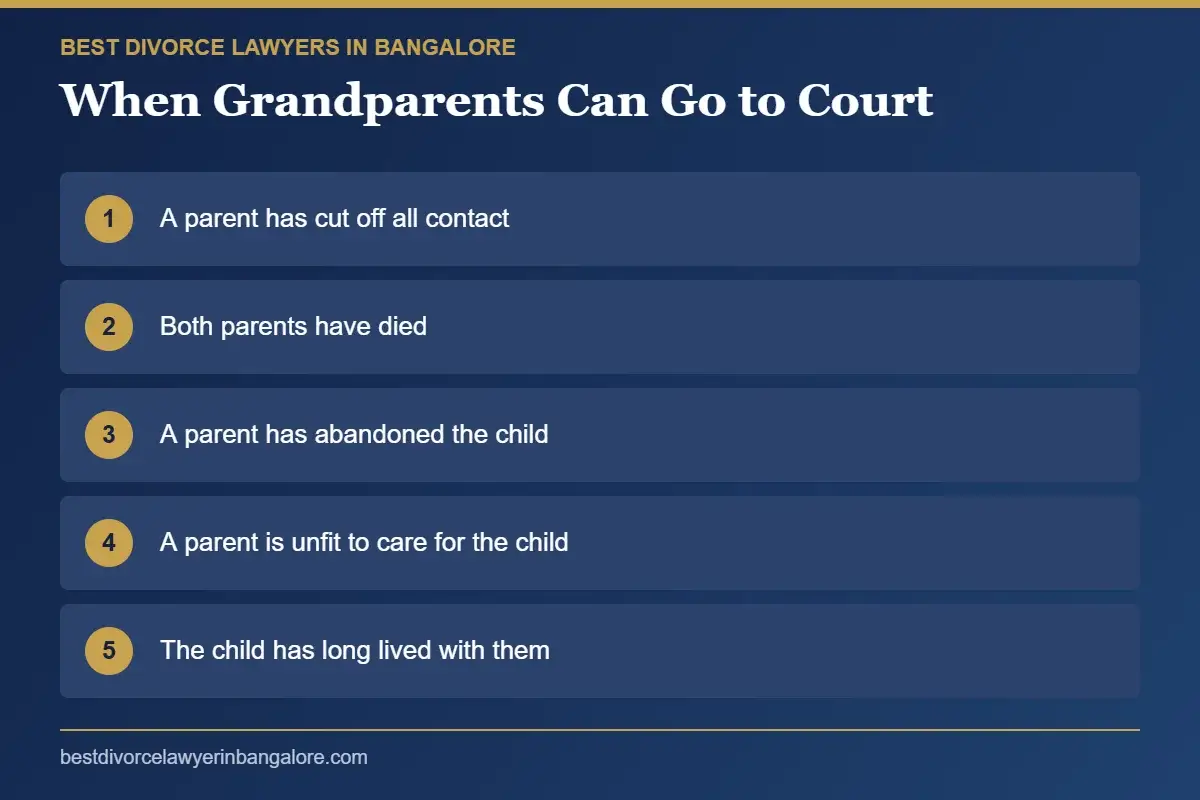
Grandparents may seek custody or guardianship when the child’s circumstances justify it, such as:
- Both parents have died, or the surviving parent is absent or has abandoned the child
- A parent is unfit because of abuse, neglect, serious addiction or untreated mental illness
- The child has lived with the grandparents for years and moving them would cause serious harm
An affectionate relationship with grandparents does not by itself mean a fit parent should lose custody.
The Supreme Court’s 2025 ruling
In Vivek Kumar Chaturvedi v. State of U.P., decided on 7 February 2025, a child had been living with his maternal grandparents after his mother’s death in 2021, and the High Court had refused custody to the father, citing the child’s comfort with the grandparents and the father’s remarriage. The Supreme Court reversed this, holding that the grandparents could not have a better claim than the father, the natural guardian, and that his remarriage did not stand against him. To protect the child, the Court ordered a gradual transition: the child stayed with the grandparents until the end of the school year with alternate weekends with the father, custody then moved to the father, and the grandparents were given visitation. The case shows both sides of the law: parents come first, but a grandparent’s caregiving bond is worth protecting.
Grandparents and parents who live abroad
Where parents work abroad and leave a child in the grandparents’ care in India, the grandparents usually act informally. If they need to take decisions for school admissions, medical treatment or travel, a written authorisation from the parents helps, and a guardianship order may be needed for longer-term arrangements or property matters.
Evidence that helps grandparents
- Records showing your role in the child’s life, such as school pick-ups, fee payments and medical visits
- Photos and messages showing regular contact over time
- If the child lives with you, evidence of their routine, schooling and how settled they are
- Evidence of any genuine concerns about a parent’s care
- Communications showing when and why contact was stopped
Focus on how the arrangement benefits the child rather than criticising the parents; courts are wary of grandparents drawn into the parents’ conflict.
Try agreement first
Many grandparent disputes are really disputes between adults. A mediated arrangement for regular visits, calls and festival time is usually quicker, cheaper and kinder to the child than litigation. Bengaluru’s Family Courts can refer families to counselling and mediation. For more on how custody is decided between parents, see how courts decide child custody.
For the overall framework, see our guide to child custody laws in India and the types of child custody courts can order.
How this guide was prepared
This guide is based on the bare acts published on India Code and on judgments of the Supreme Court of India and the Karnataka High Court. Section numbers, case citations and time limits were fact-checked in November 2026, and criminal-law references use the Bharatiya Nyaya Sanhita (BNS) and Bharatiya Nagarik Suraksha Sanhita (BNSS) in force since 1 July 2024. It is general information, not legal advice. For advice on your own case, speak to an advocate. Read our editorial standards and disclaimer.
Frequently Asked Questions
Do grandparents have visitation rights in India?
There is no automatic right, but grandparents can ask the Family Court for access under the Guardians and Wards Act, and courts grant it where contact benefits the child.
Can grandparents get custody over a parent?
Rarely, if the parent is fit. In Vivek Kumar Chaturvedi v. State of U.P. (2025), the Supreme Court held that grandparents could not have a better claim than the father, the natural guardian. Grandparents usually get custody only where parents are dead, absent or unfit.
Can maternal grandparents keep a child after the mother dies?
Not automatically. The father, as natural guardian, generally has the stronger claim, but the court can order a gradual handover and give the grandparents visitation.
Which court hears a grandparent’s custody case in Bangalore?
A guardianship and custody petition is filed in the Family Court where the child ordinarily resides.
Speak to a child custody lawyer in Bangalore
Grandparents can play a meaningful part in Indian custody cases, but their claims are judged by the child’s welfare, not family status. They can seek visitation, guardianship or, where parents are absent or unfit, custody through the Family Court. If you need advice on your own situation, consult an experienced child custody lawyer in Bangalore, or compare the top family and divorce lawyers in Bangalore on our list. The first consultation is free.